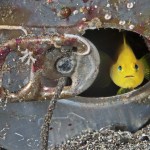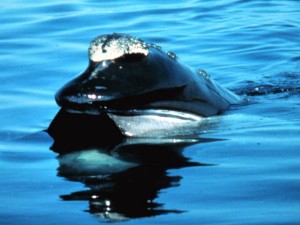

Wyland Ocean Wisdom!
Saturday, May 9th, 2009![]()
![]()
![]()
“The magic spell cast by the sea enlightens all that embrace her…” – quote from Wyland Ocean Wisdom.
![]()
![]()
![]()
“The magic spell cast by the sea enlightens all that embrace her…” – quote from Wyland Ocean Wisdom.
![]()
![]()
![]()
“Maybe you have seen God’s aquarium; it’s called the sea…” – quote from Wyland Ocean Wisdom.
![]()
![]()
![]()
“The most insignificant ocean animal is significant to the balance of the oceans…” – quote from Wyland Ocean Wisdom.
![]()
![]()
![]()
“In reality, the ocean will survive, but will we?” – quote from Wyland Ocean Wisdom. The incredible image of the ice shelf is from National Geographic Wallpapers.
![]()
![]()
![]()
“Once a child loves an animal they will forever defend it…” – quote from Wyland Ocean Wisdom.
![]()
![]()

“The sea is an endless orchestra of light and sound…” – quote from Wyland Ocean Wisdom.
![]()
![]()
![]()
“We are stewards of our planet one and all…” – quote from Wyland Ocean Wisdom. The incredible images above come from National Geographic Wallpapers.

“For some industries, the prospet of $3.5 billion in federal subsidies now, and double that in three years, might be a powerful incentive. But not, apparently, for the oil industry, which is seeing crude oil prices soar to record highs. Despite collecting billions for blending small amounts of ethanol with gas, oil companies seem determined to fight the spread of E85, a fuel that is 85% ethanol and 15% gas. Congress has set a target of displacing 15% of projected annual gasoline use with alternative fuels by 2017″. – Excerpt from Businessweek Magazine.
Click on the link below to read the entire article.
Â
 
“Could a microbe from hell help slow the pace of global warming? In the simmering, corrosive muds of Hell’s Gate hot springs of Rotorua, New Zealand, researchers have discovered bacteria that devour methane, a greenhouse gas that environmentalists consider 20 times more harmful that carbon dioxide.
GNS Science, a research organization owned by the New Zealand government, says the tough new bug is the first methane-loving bacterium found to flourish in conditions as hot as 158F, with a chemical ambience similar to stomach acid. This makes it potentially easier to adapt to other hostile environments such as landfills, which leak methane as trash decomposes.
Matthew Stott, a GNS microbiologist, says the bug could also be adapted for use in other methane-venting sites, such as mines. Publishing in Nature, the researchers dubbed their superhardy discovery Methylokorus infernorum, a mix of the Latinized names for methane and the infernal place the bug was found”.
 
Okay, so you’ve decided to do your part in helping to reduce global warming by recycling. You know that you can recycle plastic bottles, but what about the little plastic rings? Yep, it’s okay to leave them on the bottles but you do need to throw away the top.Â
By recycling your plastic bottles, you are helping to keep them out of landfills.
According to the 2005 National Post-Consumer Plastics Bottle Recycling Report, “total post-consumer plastic bottle recycling increased by more than 187 million pounds in 2005. The total pounds of plastic bottles recycled crossed the 2-billion-pound-per-year threshold to reach a new record high of 2,102 million pounds”.
Keep up the good work. Every little bit does count!
“Only time will tell if global warming will be minor or catastrophic; if it can be mitigated or will destroy the planet, to use the phrase. But one thing is certain. Companies shouldn’t wait to find out.” – Excerpt from the February 26, 2007 editorial The Welch Way in BusinessWeek.
Click on link below to read entire article.
Click on link below to listen to the podcast.
“In China, the line below which there are no hard freezes has moved northward. Since freezing temperatures kill the snail that spreads the parasitic disease schistosomiasis, this change is putting 20.7 million additional people at risk for the illness. Field studies show that the snail can survive in the new areas, says Guojing Yang, an infectious disease expert at Jiangsu Institute of Parasitic Diseases in China.” – Excerpt from the July 17, 2006 issue of BusinessWeek Magazine.
Click on the link below to read the entire article.
“The American Petroleum Institute has issued tougher standards, such as anchoring drilling platforms more securely. In San Francisco, planners are exploring beefing up the storm sewer system to deal with heavier rains.” – excerpt from the July 17, 2006 issue of BusinessWeek Magazine.
Click on the link below to read the entire article.
“The residents of the village of Shismaref are literally on the edge. Melting permafrost and the disappearance of sea ice that once protected the town from pounding waves, “Shismaref is literally being battered to the point of falling into the sea.” The townspeople have voted to move the entire village, which will cost more than $100 million.”
“In the Arctic, where a four-degree jump in average temperature over the last 30 years is “climate change on steroids.” – excerpts from the July 17, 2006 issue of BusinessWeek Magazine.
Click on the link below to read the entire article.
“Over the last several decades, temperatures are up two degrees in Mali, and the rainy season has decreased by more than a month,” says Exponent’s Ebi. That means the growing season is too short for standard rice. Researchers are developing a faster-maturing variety, but that’s only a partial solution, health experts caution, since the dry season’s potato crop is starting to fail as a result of increased heat. The economic system of the whole country could collapse, says Ebi. “In the village I’m working with, the elders know they are on the edge.” – excerpt from the July 17, 2006 issue of BusinessWeek Magazine.
Click on the link below to read the entire article.